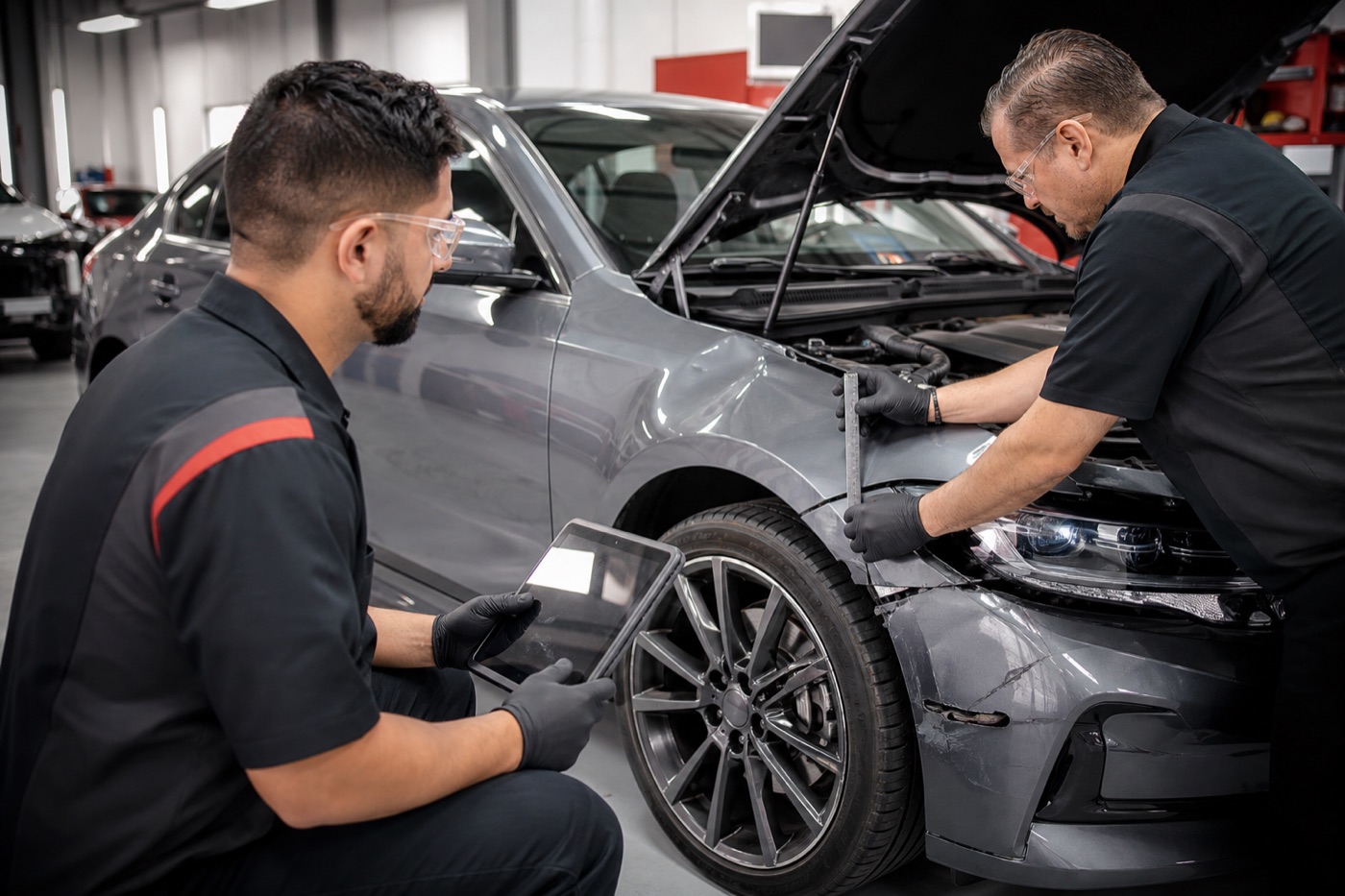
The first estimate is based on what can be seen. Once damaged parts are removed, a technician may discover additional damage that changes the repair plan.
A visible estimate is a starting point
Modern vehicles pack sensors, brackets, absorbers, wiring, cooling components, suspension parts, and structural reinforcements behind exterior panels. A bumper cover can look repairable while parts behind it are cracked, shifted, or no longer positioned correctly.
What happens during teardown?
The shop carefully removes selected damaged components to inspect the areas underneath. Technicians document findings with measurements and photos, check parts availability, and compare the damage with appropriate repair procedures.
Why a supplement may be needed
When newly discovered damage was not included in the original estimate, the shop prepares a supplement. This is an updated request that explains additional labor, parts, materials, or operations needed for a complete repair. The insurer may review the documentation before authorizing the change.
Common hidden-damage discoveries
- Cracked bumper reinforcement or energy absorbers
- Bent mounting points, rails, or structural areas
- Damaged cameras, radar units, sensors, or wiring
- Suspension or wheel-alignment problems
- Broken clips, brackets, lamps, or cooling components
- Additional refinishing or calibration requirements
Parts choices can affect the plan
OEM, recycled, and alternative parts may be considered depending on the approved estimate, vehicle needs, availability, and insurer or customer authorization. Good repair planning makes those choices clear before the work moves forward.
Often it means the shop completed a more thorough inspection and documented damage that could not be confirmed from the exterior.
Discuss your estimate