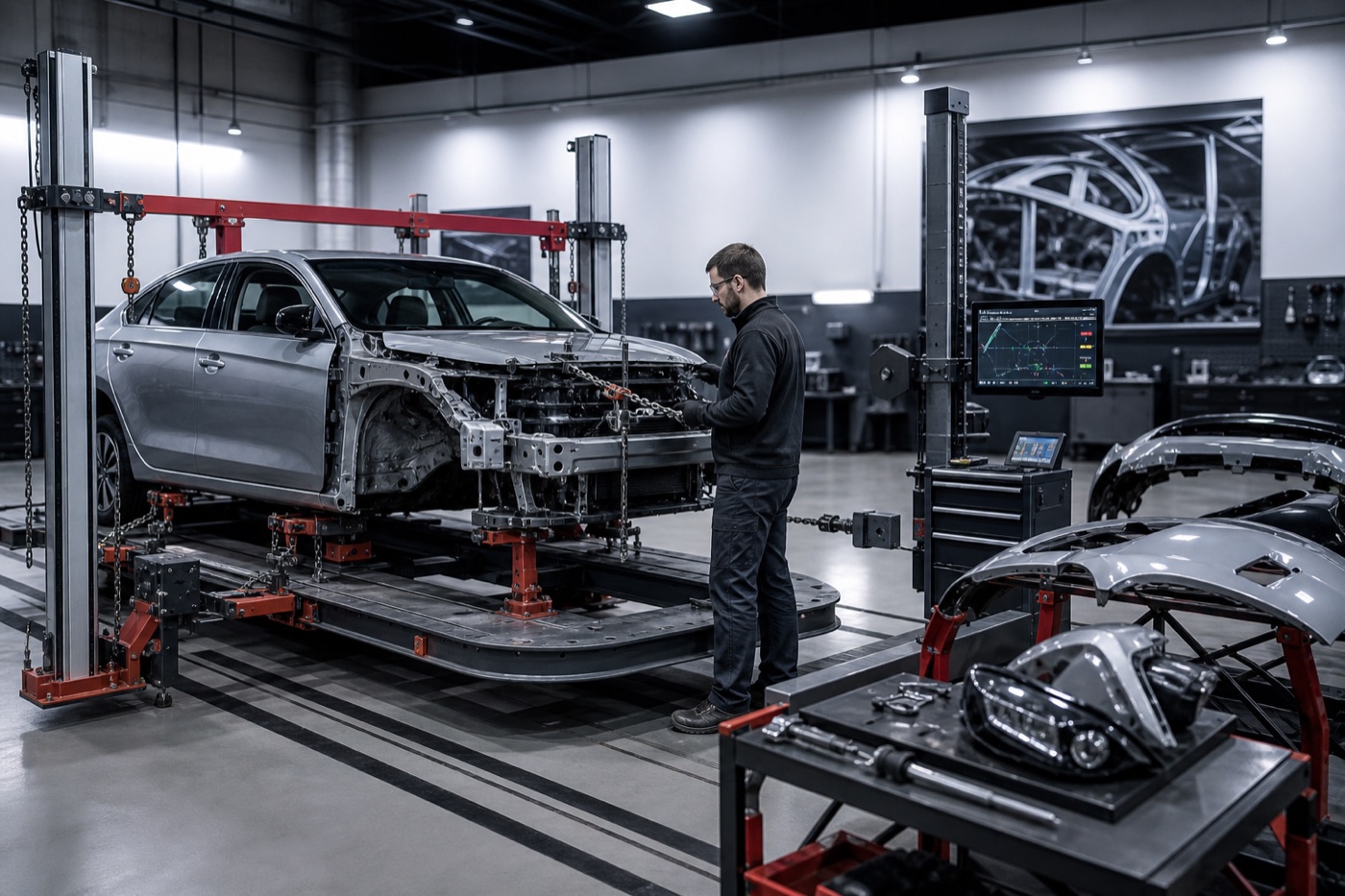
A vehicle can appear drivable after a crash and still be unsafe. When there is doubt about steering, braking, wheels, fluids, airbags, or structure, towing is the safer choice.
Do not drive if you notice these warning signs
- Leaking fuel, coolant, oil, or other fluid
- Smoke, sparks, unusual odors, or overheating
- A wheel rubbing, leaning, locked, or visibly out of position
- Steering that pulls, binds, or no longer feels normal
- Reduced braking, a soft pedal, or warning lights
- Deployed airbags or damaged seat-belt systems
- Broken lights, glass, mirrors, or loose body panels
- Damage near the battery, high-voltage components, or charging system
- A hood, door, trunk, or hatch that will not secure
Why “just a short drive” can make things worse
Driving can turn a manageable problem into greater mechanical or structural damage. A loose liner can cut a tire, leaking coolant can overheat an engine, and misaligned suspension can affect control. It may also put occupants and other drivers at risk.
What to tell the tow dispatcher
Share the exact location, vehicle year and model, visible damage, whether wheels roll, whether the vehicle is in traffic, and whether it is electric or hybrid. Ask for a flatbed when the vehicle condition or manufacturer guidance calls for one.
Where should the vehicle go?
If you already know which repair facility you want, ask whether the vehicle can be delivered there. Keep the tow receipt and note where the keys are left. Photograph the vehicle before it is loaded when it is safe to do so.
Do not guess. Top Rank Auto Collision can help you discuss the situation and begin a towing request.
Call for towing help